Tuesday, 8 December 2015

The Asteroid Threat!

The Asteroid Threat

Widnes SciBar - 11th Nov 2015
 
Andy Newsam,  Professor of Astronomy Education and Engagement, Liverpool John Moores University.

Asteroids are small rocky objects orbiting the Sun. Although most asteroids in the Solar System are in the Asteroid belt between Mars and Jupiter, not all are restricted to it. Those not in the Belt could be a threat to Earth, as could those that are occasionally pulled out of that Belt by the gravity of Jupiter - these are called ‘Trogans’. As a result, there is a small possibility of one hitting the Earth but, if it did, the consequences could be massive. It is these ‘near Earth objects’ that astrophysicists are interested in. 

The craters peppering the Moon are a sign of how asteroids can come into the vicinity of the Earth - the age of these craters can be estimated from the amount of weathering that has taken place. There are far fewer known craters on the Earth but not all asteroid strikes will have left an identifiable crater - some will have landed in an ocean or vegetation may have obscured some craters on land.

An asteroid created the Barringer (or Meteor) Crater in Arizona about 50,000 years ago - the crater is about 1200 m across and 170 m deep. The asteroid was about 40 metres diameter - tiny as asteroids go. Such small asteroids are not yet detectable but that is not a great concern because the damage caused by them, whilst significant for many miles around, is not potentially
catastrophic for life on the Earth. 

Craters
In 2004 there was a ‘near miss’ when an asteroid of about 900 metres diameter passed between the Earth & Moon. If it had hit land on Earth it would have caused a crater about ‘the size of Wales’, throwing up a massive dust plume that would spread rapidly in the higher atmosphere and could block out sunlight and  so stop plant growth. Such an asteroid landing in an ocean would trigger a massive tsunami that would travel round the Earth. The Near Earth Asteroid Rendezvous (NEAR) space mission that landed on asteroid Eros in 2000 and the Rosetta Mission & its Philea probe landing on Comet 67P in 2014 have greatly increased the scientific understanding of asteroids. Previously, knowledge was limited largely to observing them from Earth and the evidence obtained from them hitting the Earth.

In brief, the risk of a large asteroid striking the Earth in our lifetime is small – they tend to occur about every 20 to 30 million years. However, the consequences of such a strike would be massive. Shown right is the Barringer Meteor/Crater in Arizona.
Andy described how scientists are seeking how to identify asteroids that pose a threat, how to track them and make them safe.

Detection. Most of the detecting work has now been done - it is believed that about 90% have been identified.

Liverpool Telescope, La Palma
Tracking. Tracking is currently the main focus of activity. It is being done by a combination of amateur observation (e.g. the privately run Spaceguard Centre in Mid-Wales) & large telescopes that are needed to track the smaller & more distant asteroids. Andy and his colleagues use Liverpool Telescope on the island of La Palma - it is the world’s largest fully robotic telescope, i.e. it can be operated from Liverpool. With such telescopes it is possible to pick out an asteroid from many stars by comparing images of the same area of sky taken some time apart - in contrast to the stars, an asteroid will have moved. Much of assessing is done by software but as it can only be relied upon to detect  95% of asteroids, the process isn’t perfect.

From these images, the course of an asteroid can be predicted for up to 100 years. If that suggests a danger to the Earth, the asteroid’s track will be kept under review - in time, a more accurate prediction of an asteroid’s risk can be made, often with a decision to remove it from the risk list.

As part of his ‘public engagement’ role, Andy spoke about involving children in identifying asteroids from two or more time-separated images from the Liverpool Telescope. A 12 year old spotted a faint trace that the professionals hadn’t noticed!

Making Safe. As yet we have no means of ‘making safe’ n asteroid heading our way. Use a nuclear bomb to blow them up? Apart from the practicalities of doing it, this could cause the Earth to be bombarded with broken lumps of the asteroid. Other possibilities include deflecting the asteroid’s path such as with the gravitational effect of a nearby massive weight (a ’gravity tractor) or painting one side white. If tracking identified a threat 20 years off, would there be the time & motivation to find a way to try to prevent a collision, to practice it & then to use it to make the Earth safe? 

Further Information

Andy is Director of the National Schools Observatory; ‘an online resource that brings the Universe  into the classroom’:- http://www.schoolsobservatory.org.uk/
Video of Andy actively engaging young people into science. Worth watching; Andy talks about finding asteroids from 42 minutes:- http://www.iop.org/resources/videos/education/schools-and-colleges-lecture/page_50047.html
Spaceguard Centre, Mid-Wales:- http://spaceguardcentre.com/

Bob Roach       30th Nov 2015

Tuesday, 3 November 2015

Next Widnes Sci Bar Meeting and a Bonus

The next meeting of the Widnes SciBar will be on Wednesday 11th November at  7.30pm at the Hillcrest Hotel, Cronton Lane, Widnes.


Andy Newsam,  Professor of Astronomy Education and
Engagement at Liverpool John Moores University will discuss:

The Asteroid Threat

Asteroid impacts happen, but how big is the threat to humanity, what are we doing about it, and what more could or should we be doing? This is a debate the human race needs to have - and soon! Why not start here?
Presented by Friends of Catalyst & the Catalyst Science Discovery Centre
 
And an extra special treat for those who can make it:
 
2 pm at Catalyst Science Discovery Centre 
 
Professor David Southwood will draw on his 35 years of involvement with the European Space Agency to talk about:- 
 
Huygens & Rosetta Space Probes - Happy Landings
 
David will talk about his involvement in the Huygens probe launched in 1997 to Saturn’s moon Titan, landing in 2005 - the Rosetta probe launched in 2004 that resulted in the Philae lander landing on Comet 67P in 2014.

Entry to the talk will be free - access to the lecture theatre is up the staircase near the entrance. Whilst at Catalyst you can also visit:-
 
The Mersey Gateway Visitor Centre to find out about the construction of the new bridge over the Mersey & related approach roads - entrance to the exhibition is free,
 
The Catalyst Science Discovery Centre exhibition areas - charges apply:- 


Thursday, 15 October 2015

Hans Krebs, from Hildesheim to Sheffield

The Widnes Sci Bar provided an opportunity for me to try out my talk on Sir Hans Krebs from a wider historical perspective as well as trying to communicate the impact of his work. As usual, the audience was good in number and searching in questioning, after the drinks break! It is really rewarding to talk to a group who have such a range of life experiences and who can call up memories of school, university and science from the work place. The talk included a few items to demonstrate the changes in technology associated with Biochemical research: from the Warburg flask to the fluidic microchip which stirred up a few memories of the craftsmanship of the scientific glass blower for some. Following last night's talk, which is provided as a presentation labelled Krebs Talk (on the right hand side-bar), I have provided some of the requested information at the foot of this post. This includes a summary of the knowledge base in metabolism at the turn of the 20th Century, from my undergraduate Blog site, together with a set of links relating to ATP and energy production in the mitochondria and in relation to photosynthesis. The body of the post summarises some of the main points from the talk and includes selected images (all of which are in the attached power point show). 

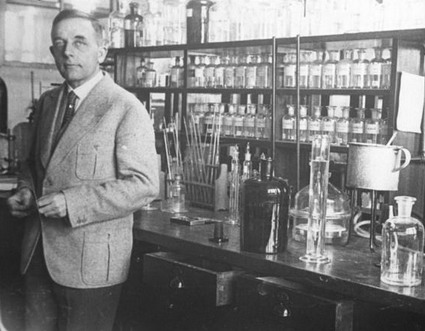
Hans Krebs was born in Hildesheim, north Germany in the first year of the 20th Century: his father Georg was a surgeon and his mother was Alma Davidson. Hans attended the local grammar school and subsequently studied medicine medicine at a range of University locations including Göttingen, Freiburg-im-Breisgau, Hamburg and Berlin, where he eventually joined the laboratory of Professor Otto Warburg. Warburg (right) was both a technical and intellectual genius; and in his laboratory, Krebs acquired the cutting edge experimental techniques of the era and soon developed a keen interest in the major biochemical challenges of the day. Key to the work that Krebs was to pursue first at Freiburg (1930-33), then Cambridge (1933-5) and finally at Sheffield (1935-1954), which would lead to the Nobel Prize in 1953, was the Warburg flask and manometer. This device enabled Krebs (and most Biochemists of the day), to make careful measurements of carbon dioxide release and oxygen uptake, by thinly sliced tissues incubated with a range of carefully controlled metabolites and inhibitors. 

In 1937, in association with William Arthur Johnson, a PhD student in the laboratory (you can read a nice appraisal of Johnson here, by my colleague at Sheffield, Milton Wainwright), Krebs published a manuscript entitled 

"The role of citric acid in intermediate metabolism in animal tissues" (1937) Enzymologia 4 148-156. Krebs H.A. and Johnson, W.A.

A summary of his work in the context of the field is available as a transcript of his Nobel Lecture as a pdf here. The original manuscript was rejected by the journal Nature, through an apparent lack of space! Krebs immediately submitted his findings to Enzymologia and rapid publication ensued. The Krebs cycle is also referred to as the citric acid cycle or the tri-carboxylic acid cycle (TCA for short) and occupies a central position in the metabolic "circuitry" of the cell. The image below (which a number of the audience were keen to obtain a large format print!) gives some indication of the incredible complexity of metabolic pathways, much of which would not have been unlocked without the incredible experimental insight brought by the work of Hans Krebs. (I came across this Blog site where those of you who wish to try and obtain a printable file can contact the Blogger).


I realise that the resolution is too poor for a detailed analysis, but it does create quite an impression!

The problem that followed on from the Krebs Cycle, was how do the products generate energy in the form of adenosine triphosphate (ATP). It was clear from the questions that this was of interest to many of the audience, so here is a summary of my response to the questions and some links to further reading.

The "products" of the Krebs Cycle are carbon dioxide (waste) and importantly "reducing power" in the form of NADH and FADH. The electrons that are conducted along a series of electron carriers associated with the inner membrane of the mitochondria, are punctuated by a series of large rotary enzymes that harness the differences between the proton concentration on the inner an outer face of the membrane to catalyse ATP synthesis from ADP and inorganic phosphate. You can read about NAD and the enzyme that finally catalyses the synthesis of ATP by following the links to a series called molecule(s) of the month. As I said, it was a radical rethink of methods and aspects of physical chemistry that led Peter Mitchell to propose the chemiosmotic theory of ATP synthesis. This had a bumpy ride at first with most "old school" Biochemists, but the subsequent joint award of the Nobel Prize for Chemistry in 1997 to Sir John Walker (Cambridge) and Paul Boyer (USA) gave a molecular basis for the Mitchell hypothesis. The MRC website has some animations  and this youtube movie is breathtaking! I hope it explains the phenomena better than my hand-waving!

Finally, for those of you who want to read more about photosynthesis, there are the usual wiki links, but you might like to look at Neil Hunter's web site, a colleague of mine at Sheffield who was awarded an FRS for his work on bacterial photosynthesis a few years ago. There are some powerful new microscopy techniques that are beginning to provide molecular insight into the molecules in vivo and I recently attended a lecture by the Baumeister group from the Max Planck Institute in Munich. The images on the left are visualisations of the thylakoid stacks that form the structural support for the light harvesting complexes that feet photons into the chloroplasts and the photosystem which runs alongside the fixation of carbon dioxide into a reaction catalysed by the most abundant enzyme on the planet Ribulose Bisphosphate Carboxylase, or RUBISCO! 

I hope this provides a helpful addition to the talk material and any comments are most welcome. You can also read more about the Sheffield Krebs Fest in this pdf version of the small brochure I passed around.

Friday, 2 October 2015

Symmetry is the key to everything Widnes SciBar, 9th Sept 2015

 Symmetry is the key to everything

Peter Rowlands
Honorary Teaching Fellow
Department of Physics, 
Liverpool University
Peter said that his interest in the history of science leads him to believe the conventional teaching of physics is not the source of the deepest creativity in physics and that this is part of the reason why there has been no really new ideas at the fundamental level since the appearance of the Standard Model over 40 years ago. Whilst it continues to be widely accepted, with numerous experiments since then verifying it, there has been no progress in explaining this theory. Many efforts to do so have involved ‘string theory’ despite the fact that such an ‘explanation’ is more complicated than what it seeks to explain.
When Peter did his Phd, he designed and built his own apparatus for carrying out his research project, and computers had little relevance - he recalled they were so primitive he could work out his calculations easier by hand.
In contrast, the Phd student in high energy physics today has little contact with setting up the apparatus - that is done by large design teams and specialist engineers working to specifications prepared by lead scientists. A student will often spend a year working in shifts at a laboratory such as CERN monitoring the experiment from a control room. They have access to huge stores of data on which they perform endless computer analyses. Before any results are published they are subject to significant internal scrutiny.
Peter doesn’t work like this. He doesn’t use computers and ‘work’ for him involves thinking, writing and discussing. ‘I don’t work away at the same problem, I wait until something creates link in my brain’. He is interested in the big questions & in using a more philosophical approach than is normal for physicists.

Climb the Mountain or Cross the Valley?

Lee Smolin, an American physicist, suggested there are two types of scientist. Most scientists are ‘mountain climbers’ who work in a particular area of their science throughout their career and gradually attain a summit of perfection. Much less in number, ‘valley crossers’ look for connections between different areas. Peter is a ‘valley crosser’ and, he believes, the really major breakthroughs nearly always involve ‘valley crossing’.
For example, Isaac Newton stands out from other physicists of the past in that he described the seemingly intangible world of the falling apple in totally abstract ways. In so doing, he defined mass on the same basis as time and space. He thought outside the paradigm (or the conventional thinking), but not contradictory to it.
Peter recalled that at the age of 12, rather than playing with Meccano, he played around with mathematical equations, such as those from Einstein’s Special Relativity theory. He noticed that if he kept increasing the speed of light, mass became imaginary - his first ‘discovery’. This was an early example of his desire to find out what happens if you theoretically push things to extremes.
Whilst Peter’s first interest was in using maths to get to the most fundamental laws, he realised that physics was the setting where he could do this. From an early stage he thought that symmetry was the key to making breakthroughs and his talk was about the results of a very long term personal and unique project in this area. Currently his proposals are seen as ’interesting’ by other physicists but they could become an alternative to the Standard Model if confidence in it fades, e.g. due to results from the Large Hadron Collider not supporting it.
Example of Symmetry in Particle Physics

Symmetry is everywhere in physics, especially in particle physics. For example, being negative the electronic charge has the characteristics of an imaginary mass. Similarly, in relativity, time behaves as though it is an imaginary dimension of space - there is some kind of symmetry there and it must be there for a reason! Peter proceeded to present his theories but as this involved complex mathematics, this is far enough for now! As commented by one of those present, ‘I found his mathematics and matrices a bit beyond my immediate comprehension although I could see how it had resulted in a mathematically beautiful result. Whether this symmetry analysis is a true representation of nature remains to be seen, but I am tempted to hope so.’ 
 
Bob Roach
roach36@talktalk.net
23rd September 2015

Friday, 3 July 2015

Andrew Davies- A Brief History of Astro-Photography June Sci Bar

Image result for andrew davies knowledge observatoryLast month's Sci Bar presentation was delivered by Andrew Davies, a passionately enthusiastic amateur astronomer, who took the audience down a fascinating journey into the history and skills of astro-astronomy. Andrew introduced himself as a former teacher who appears to have managed to turn his hobby into an incredibly rewarding and successful community service. With his partner, Sue, and support from the local authorities and a range of organisations, he described his approach to educating young adults from some of the most challenging communities through astronomy. You can read more about the work of the Knowledge Observatory by following the link (that's Sue and Andrew top left). However, as Andrew pointed out, by the time I post this, the Observatory will have relocated from Wigg Island (a Nature reserve that has risen from the ashes of a copper factory, having a wartime association with mustard gas production!), to what promises to be a new "mecca" for astronomers which can be viewed at the Astrofarm Facebook site. 

Andrew began his presentation (which thoughtfully incorporated a drinks interval!) with the story of his serendipitous find on a market stall some years ago:  a box of "magic lantern" slides. Already fascinated with the moon and stars as a youngster, the first part of Andrew's talk took us back to the pioneering days of photography, telescopy and of course astronomy, which like much of Victorian Science was the pursuit of the wealthy gentlemen. Andrew stressed the parallel development of photography itself with that of  astronomical telescopes. Names including Henry Fox Talbot (HFT) who would file and defend many patents relating to the chemistry of reproduction (see the famous long exposure calotype, top right, in which HFT appears in several positions in the same scene!). 

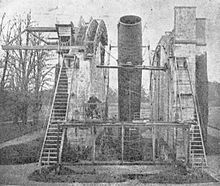
Using the images from his "prized" magic lantern collection, Andrew gave us a whistle stop tour of the instruments that have provided us with some of the earliest images of the planets, their moons and the more familiar features of the "heavens". Most of the early slides were actually drawings transferred onto the glass slides taken from observations on telescopes The telescope shown right was famously assembled by William Parsons York, the third Earl of Rosse. What I liked was Andrew's side by side comparison of early images with some of his own photographs. Andrew was at pains to point out the amazing quality of some of these historic observations despite the clockwork mechanisms of the telescopes, compared with modern electronic tracking technology.  

Andrew introduced us next to the systematic and scientific approaches to astrophotography practised for example by E.E. Barnard who used the University of Chicago's 40" telescope at the Yerke's Observatory to produce early high resolution images of the milky way, comets (LHS), eclipses etc. Again, Andrew used the comparative images from "then and now" to share his enthusiasm and respect for these early pioneers of astrophotography. I was impressed by the extraordinary expert knowledge of the Widnes SciBar audience who were able to identify many astronomical landmarks from Andrew's slide show!

The second half of Andrew's presentation included detailed insights into the tricks of the trade and he showed many breathtaking images of the moon, sun spot phenomena, and much much more: I couldn't possibly do justice to Andrew's enthusiasm, knowledge and the beauty of his images. However, I hope I have managed to convey the impression of an evening fuelled by passion and enthusiasm for astronomy and I wish him and Sue well in their new venture in France. Our loss of his energy and commitment to the Knowledge Observatory will surely be Limoges' gain!

Friday, 29 May 2015

The Flaming Badischer! by Bob Roach


During the last Sci Bar, Bob mentioned the "Flaming Badischer Plant at ICI, here is his story in more detail. If anyone has similar stories please email me and I'll help "broadcast" them for you via the Blog site (email me, Dave Hornby on dphornby@gmail.com)

The  Flaming  Badischer

A Personal Recollection

Many people who lived in Widnes & Runcorn around 1966 to 1968 will recall the huge flame that was often emitted from the top of a flare stack at ICI’s Castner Kellner Works in Runcorn. Such was the brightness, I recall someone who lived several miles away saying it was light enough to do some gardening at 10 pm in September. The plant concerned was locally known as ‘The Badischer’.

For those of us who lived some distance away, the brightness was a curiosity. However, it was a different matter for the residents of Weston village just up the hill from the site - such was the slope of the land, the flare was more or less level with the village, and they could also hear the roar from the flame. With flaring often going on overnight, getting sleep was a problem, and with many of the local residents being employed by ICI, there was probably a reluctance to complain. 

Not so the Vicar of St John’s Church in Weston. With his church and home facing the flare, his services as well as his sleep were interrupted. When his complaints to ICI were ignored he was able to ratchet up the pressure when he somehow obtained a highly confidential list of the home phone numbers of the key managers, not only of the Castner Kellner works, but for the whole of Mond Division.

So, if the vicar was awake at night due to the light & noise from the flare, he worked his way through the list, phoning people to tell them what their flare was doing to him & his neighbours. In addition, he told them that if the flare was still alight when he got to the end of the list, he would start from the top again. As these were people who needed to be on call in case of an emergency, leaving the phone ‘off the hook’ wasn’t an option. With ICI senior managers being kept awake, there was a sudden change in ‘public relations’.

Within days, managers met the vicar to discuss his concerns and arrangements were quickly put in place to restrict the times when the flare could be used. A list went up in the plant control room identifying an early evening cut-off point and the times of services at St John’s when flaring was absolutely forbidden.

I recall being in the control room at the plant one Sunday afternoon when they were trying to settle the very temperamental plant into steady operation so as the flare could be turned off before the afternoon service at St John’s. With a couple of hours to go, staff were fairly confident they would succeed. An hour later, a problem had cropped up and the tension was building up - if they couldn’t quickly get steady operation, hours of effort to get the plant going and a great deal of fuel would have been wasted. 

What was the process about? The plant was newly built to produce acetylene, a gas that was then a key component for making other chemicals, the then increasingly popular plastic PVC in particular. The 1960s was the era of making chemicals from oil in refinery type settings. Liquid raw materials stored in tanks were pumped into reaction vessels by means of motorised valves operated from the distant control room, the staff there being dependent on information provided by instruments. The chemistry took place in these vessels, often unseen by eye. There was usually a flare stack, used at start-up & close down (particularly in an emergency) to burn off inflammable substances that couldn’t be used to produce the required product.  

As ICI didn’t know much about this sort of technology, they bought the rights to a newly developed ‘oil refinery’ type of process from BASF, a German chemical company that had originally been called Badische Anilin & Soda-Fabrik, hence the ‘Badischer’ name. Such was the eagerness of ICI to build this plant, construction commenced before BASF had properly tested its own first full size plant. 

This process was based on the fact that when oil burns, a significant amount of acetylene can be produced in the flame. However, as acetylene itself burns very readily, most will burn away in the flame that produced it. A key feature of the BASF process was to use a process called quenching that involved squirting a liquid into the flame chamber to cool the flame, so minimizing this extra burning. 

A technical challenge was the choice of substances to use to quench the flame because cheap materials like water were not suitable for the task. The chosen material was naphthalene, known to everyone from that era as the constituent of moth balls that gave them their identifiable smell (do they exist nowadays?). Although naphthalene is a solid at room temperature, at the required temperature for quenching it was liquid and could be pumped around. 

The quenching liquid also had the important job of removing from the flame chamber the carbon particles (soot) produced in the flame. As naphthalene wasn’t a cheap, it had to be recycled, and the recycling needed to take the carbon particles out of the liquid ‘sooty naphthalene’ otherwise it would soon become unusable. 

With construction going ahead at Runcorn, word came from BASF of problems with their original plan to recycle the naphthalene, namely by distilling it off in ‘kettles’ -yes, that was what they were called! The idea was to boil the naphthalene off, leaving the soot behind; then the now clean naphthalene was condensed to a liquid for re-use. In view of the difficulties, BASF advised ICI not to install kettles but to use centrifuges instead. So, with some quick and expensive re-designing, the ICI plant was built with centrifuges. However, with construction nearly complete, word came from BASF, ‘Sorry, centrifuges don’t remove the soot but we have now got the kettles working’. ‘But because of your advice we haven’t got kettles!’, said ICI.

When ICI tried to get the plant working there were lots of unreliability problems in the complex process, e.g. pumps breaking down & back-up pumps not working.  Also, the problems with centrifuges that BASF had reported soon cropped up. As a result,  ICI was having to pay to get rid of lots of ‘sooty naphthalene’ and buy lots of fresh naphthalene - such was the demand, the world price shot up.

Senior management asked, ‘Who is the Castner’s expert on centrifuges?’ No answer. Stage by stage the net was cast wider, up to ‘Who in ICI across the world knows about centrifuges?’ Still no answer. This highlighted the problem of buying technology you have no experience of! Hurriedly, a group was formed in the Research Department to try to find how to get the centrifuges working efficiently. This was how I got involved.

With work going on in two laboratory teams, a couple of us set up & ran a ‘pilot plant’ so as promising results from the small scale work in the laboratories could be tested on something like an industrial scale before being tested on the Badischer plant itself.

One thing we did was to seek the guidance of ‘technical’ staff from the three centrifuge manufacturers in Britain, one of whom had supplied the huge centrifuges on the Badischer plant that weren’t doing the job they were supposed to do. The first two were an utter waste of time - their only experience was providing centrifuges to breweries to take the yeast out of the beer so it wasn’t cloudy. They hadn’t a clue about centrifuges being used in any other setting. 

On arrival, the guy from the third firm immediately apologised for wasting our time - he had no technical knowledge but had been sent because the ‘technical’ people had refused to come. He was the most useful one we met - he confirmed what we were suspecting, namely that the ‘technical expertise’ was desperately limited to taking yeast out of beer. Also he told us of a surprising occurrence when a centrifuge was ‘wrongly’ set up but was astonishingly effective. He suggested that as manufacturers were in business to sell centrifuges, they had no interest in a curiosity that could result in their customers needing fewer centrifuges. 

On the pilot plant we used large quantities of volatile liquid chemicals, full of soot when we had finished with them, so no use to anyone. When we had about 100 drums, each containing 45 gallons, somebody had to do something with them. However, we were told that it wasn’t our responsibility & eventually they were taken away; to where, we were never told. I have always had a bit of a conscience about what happened to them. 

From our own efforts over the next 12 months we learned how to make use of the curiosity we had been told about to get the much better effectiveness. We also learned how to get those darned fine particles of soot to stick together - bigger particles would be more easily removed by a centrifuge. The next stage was to try running the two approaches together. I recall, when doing some paperwork near the pilot plant, hearing a change to the familiar sound of the centrifuge. I will always remember that when I went on to the pilot plant to see what was happening, the sloppy semi-solid black mess of carbon particles was being pushed out of the centrifuge like nothing we had seen before. Subsequent analysis of ‘soot in’ & ‘soot out’ & the repeating of the test proved we had hit on something that was dramatically effective. 

However, to implement what we proposed on the huge plant would cost a lot of money & take many months to implement. Also, the previously mentioned reliability problems of pumps and instruments continued to be a second headache.  And, by this stage, another ‘non-acetylene’ route to making PVC was becoming available. 

In the end ICI decided to abandon efforts to get the plant working. It had cost a vast sum of money - all the new cars in the plant car park and first ventures into continental holidays were evidence of this, paid for by endless overtime. 

To be reasonably brief I have omitted all sorts of personality issues, memorable moments, etc. It was generally assumed that ICI would ensure that the career of whoever ‘sorted out’ the Badischer problem would be ‘made for life’ and that those who played their part would prosper. When the pressure is on & careers can be ruined or enhanced, human nature can become very raw! In the end, no one won ‘glory’.

Suffice to say, due my Badischer experience, the ‘interpersonal dynamics’ in particular, I became aware that I was more interested in people than chemicals. This triggered a career change; I left ICI & trained as a Probation Officer & happily worked in that setting in Merseyside for over 30 years.

Well over 40 years on, that is how I recall it! If anyone has some sooty naphthalene they want to clean up, get in touch.

Before Badischer. Prior to the Badischer process, acetylene was produced at Castner Kellner Works in Runcorn by the Carbide process. In a method little changed since its invention in 1888, coke and lime were heated to 2,000oC, a temperature that required a special electric furnace. Molten calcium carbide, glowing white with the heat, was run off from the furnace into trucks where it cooled & solidified - a hot & spectacular sight. Once the carbide was made, acetylene was released by crushing it and adding water. In the early days of motor cars their lights operated in the same way, if on a much smaller scale - water was dripped on to calcium carbide and the acetylene given off was burned, giving a very bright light.

Prior to the ‘oil refinery’ type of chemical manufacture with its ‘at a distance’ operation, processes tended to rely more on physical effort & experienced ‘hands on’ control. Typical of its era, the Carbide plant required many process workers doing lots of physical work in extremely hot conditions - by repute they drank mega quantities of beer to replenish their fluids. It was an expensive way to make acetylene - but it worked. However, it did not produce the quantity required by the 1960s.

Bob Roach    Sept 2014     roach36@talktalk.net     

Thursday, 28 May 2015

How relevant is the story of the birth of the Widnes chemical industry for today?

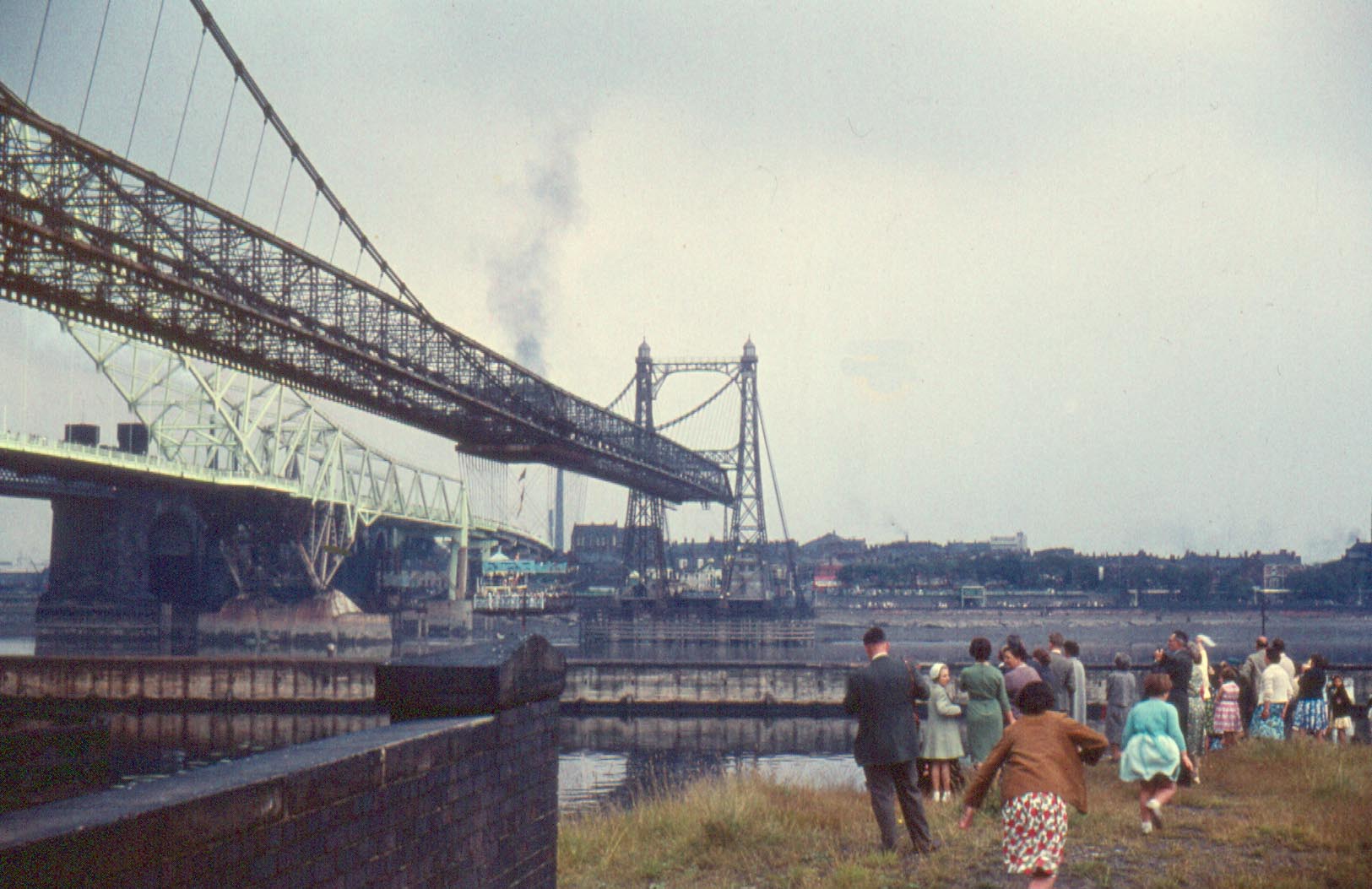
The last Widnes Sci Bar was delivered by Bob Roach (and his power point is appended in the side bar). Bob took us on a journey through the social and economic development of Widnes infused with the chemistry of the Leblanc process, and the challenges facing the early pioneers of chemical engineering. Bob's "credentials" give him an interesting "take" on the subject: he worked in the industry in the '60s (19! he's not that old!) and he has lived and worked amongst the community in Widnes, developing an affinity for the town and its citizens past and present: the view of the old and the new (soon to be added to) Mersey crossings from Ross Bullock's nice web site seems a suitable image (top LHS). My own interest in this subject has some overlaps, but I am particularly interested to see whether a detailed analysis of the origins, the growth and subsequent decline of the Chemical Industry in the "greater" Merseyside region  provides us with the insight for harnessing the developments in Biotechnology: currently under discussion under the banner of "Synthetic Biology" (take a look at the government's recent investment at Manchester University's Centre for Synthetic Biology of Fine and Speciality Chemicals). After all, one of the fundamental justifications for studying history is to avoid the mistakes of the past and perhaps more importantly anticipate the problems that might scupper a new commercial venture! 

In the beginning. Bob began his talk with a potted history of the chemistry of the Leblanc process (RHS and in more detail in Bob's presentation slides) and the bad timing (for Nicolas Leblanc!) who benefited from the patronage of Philippe, Duke of Orléans during the late 18th Century in France, which enabled him to collect the prize money offered by Louis XVI and the French Academy of Sciences. This was an attempt to reduce France's dependency on imports for its alkali production, since France had just emerged from a war with Russia. However, scholars of History will look at the dates and realise that a close relationship with the monarchy in France in the 1790s, was a bad plan; and one that was liable to lead to you losing your livelihood, if not your head! And so France's missed opportunity to capitalise on the Leblanc process was Britain's gain. I am pretty sure that since the French Revolution, this story has been repeated in industry a number of times, and the fact that the UK, the country from which Graphene came, holds around 50 patents whilst China, South Korea and the USA hold between them 5 000 on applications of Graphene, suggests that we haven't read our own history (you can read a short Guardian article here on this)!

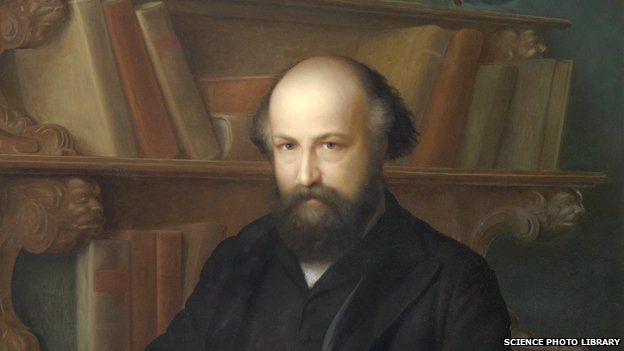
Ludwig MondThe people. Bob provided us with a charming insight into the shakers and movers of the Chemical Industry, from the "visionary" pioneering character of  John Hutchinson, who marshaled brilliant young chemists while striking tough business deals, to the brilliant inventiveness of the polymath William Gossage. Then there was the flamboyant genius, if not somewhat precocious, Dr. Ludwig Mond (LHS), born in Germany, but in death a British citizen. However, Bob was keen to point out that on a number of fundamental issues of judgement; the otherwise brilliant, Swiss Industrial Chemist Ferdinand Hurter, was not infallible!  Importantly, he persisted with the predictability and longevity (as he thought) of the Leblanc process, when the new wave of industrialised electrochemistry was lapping at the factory walls! We were also reminded by Bob of Hurter's (and his colleague at the Gaskell-Deacon works, Vero Charles Driffield) major contributions to Photography. In fact they were jointly awarded the Progress Medal of the Royal Photographic Society in 1898).

My good friend Professor Walter Blackstock who attended the talk has provided me with some links to two books that Bob referred to, both are available to view online. 

"The white slaves of England, being true pictures of certain social conditions in the Kingdom of England in the year 1897" by Sherard, Robert Harborough, 1897, available to read at:

https://archive.org/details/whiteslavesofeng00sheruoft

and

"Some founders of the chemical industry; men to be remembered" by Allen, J. Fenwick (John Fenwick), 1907.

Contents:
I. William Gossage.--II. Josias Christopher Gamble.--III. James Muspratt.--IV. Andreas Kurtz.--V. Henry Deacon.--VI. James Shanks.--VII. Christian Allhusen.--VIII. Peter Spence.--Appendix I: Mr. William Keates

https://archive.org/details/somefoundersofch00allerich
 

The town grows. Before the boom in the Leblanc trade in Widnes, the town, a collection of hamlets in Appleton, Farnworth and Ditton, was known as Woodend. Interestingly, the population figures tell a tale of massive job creation: from around 2 500 in 1841, to 25 000 in 1881. The interviews with Alkali workers in Sherard's book are often tragic: noting of course its controversial reception and the critical comments in Hardie's take on the Chemical Industry. Thanks again Walter for the link:

Hardie's "A History of the Chemical Industry in Widnes" is currently for sale s/h on Abe for £9.99 plus £2.80 postage - a good price!

http://www.abebooks.co.uk/servlet/SearchResults?sts=t&tn=widnes+chemical+industry


Science and Society. Bob covered an enormous topic in a relatively short time (time flies when you are having fun!) and for me it brought back memories of school Geography lessons: Hutchinson's visionary instincts about location,  resources, supply chains and transport, are great lessons in business location. The consequences of unfettered growth in the absence of a parallel programme of Health and Safety legislation and the poor consideration for sustainability, are lessons that we need to take form this story. Then of course we have the rise of worker's rights, pay and conditions and the rise of Socialism as a third way from the Victorian "toing and froing" of Whig and Tory politics (sound familiar?). These events paved the way for the latter day, generous and ground-breaking terms of employment given to employees at Unilever and ICI in this region in the middle of the last century. Finally, let us not forget the influence of two World Wars on the Chemical Industry: this mix of politics, society, economics, geography, chemistry, culture, inward migration, work-life balance and education were all touched on in Bob's fascinating presentation

Lessons from our Legacy. As a final, personal thought, we have our Catalyst Museum (LHS) in Widnes which is the Guardian of the tremendous legacy of our region's Chemical Industry heritage: good and bad! But I believe the History of the Chemical Industry in Widnes is a story that should be understood and promoted much more widely. The events that Bob surveyed for us, provides so much valuable wisdom for those charged with the responsibility of investing in, or regulating, the industries of the future; whether it is Biotechnology, Smart Materials, Software, Hardware, Electronics, Nanotechnology, Renewable Energy etc. etc. The History of the Chemical Industry in Widnes, like that of the Textile Industry in Lancashire, or the Shipping Industry in Liverpool and Glasgow,  holds so many valuable lessons for us as we try and build new sustainable industries, and create new jobs for the coming generations. 

Thanks Bob for a thoroughly enjoyable evening and Walter Blackstock for the information: I would stress that these are my own views.